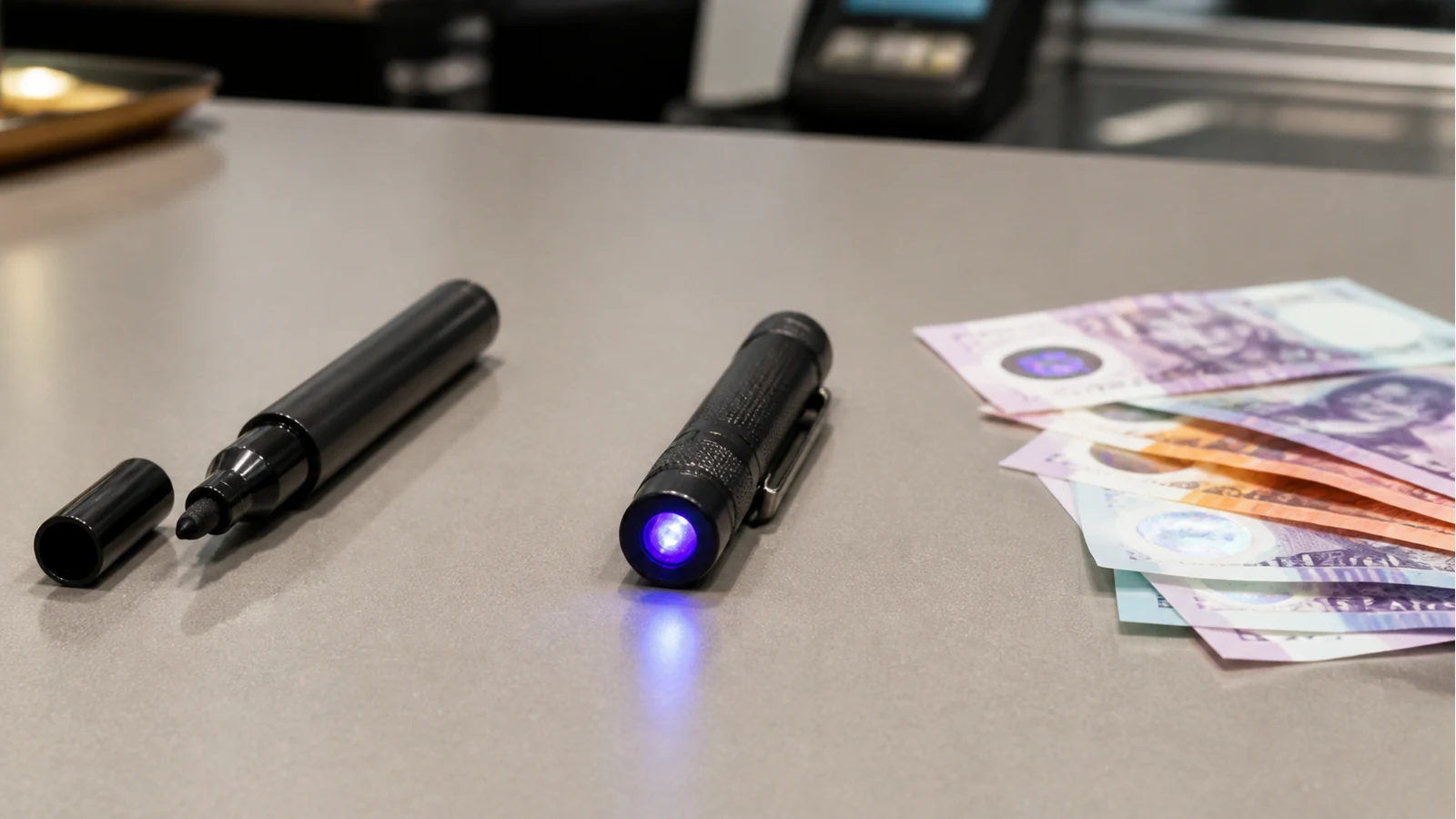
Ink Pen Vs Uv Pen Polymer Banknotes Uk
For current UK polymer banknotes, an old-style ink detector pen should not be your main check. The Bank of England FAQ is direct: detector pens do not spot counterfeits printed on polymer. A UV check is more relevant because current notes include fluorescent features, but even UV should sit alongside look, feel and tilt checks.
The best choice depends on where you handle cash. A fixed retail counter may justify a tested machine or formal process. A market stall, pub back bar, taxi or occasional private sale may need a portable tool and a stricter rule about when to refuse a note. The comparison below is designed to stop you buying the cheapest object that looks like a detector but does not match the job.
Decision Table
| Option | Best fit | Weak point | Decision |
|---|---|---|---|
| Ink detector pen | Legacy paper-note habits and very limited triage. | Bank of England says detector pens do not spot polymer counterfeits. | Do not choose as the main UK polymer-note check. |
| Cheap UV keyring | Emergency light source where expectations are low. | May not emit the ideal wavelength and can be hard to use consistently. | Treat as a compromise, not a staff process. |
| Dedicated portable UV pen | Small shops, stalls, bars, taxis and one-off cash checks. | Still needs look, feel and tilt checks. | Good first step when cash volume is moderate. |
| Counter-top machine | Higher cash volume, fixed checkout, audit-led process. | Costs more, occupies space, may need maintenance. | Choose when manual checking becomes a bottleneck. |
Why Ink Pens Lost the Argument
Ink pens became popular because they were cheap and easy. Polymer changed the risk. The current Bank of England FAQ says detector pens do not spot counterfeits printed on polymer, so buying one as your main check gives staff false confidence. False confidence is worse than no tool because it encourages people to skip the visible features.
What UV Adds
UV targets a specific fluorescent feature. On the £20 note, the Bank of England describes the UV number appearing bright red and green against a duller background. That makes UV useful at a till or stall, especially in dimmer light, but the same page also lists other features. The right habit is comparison, not single-factor approval.
When a Machine Is Better
If staff are checking bundles, recycling cash into machines or processing deposits, a portable pen is probably too manual. The Bank of England business scheme points businesses toward training and best practice; larger cash operations should also look at formal equipment and supplier guidance. For low-to-medium cash handling, a pen can be the lighter tool.
Negative Fit
- Choose a machine if note checking is constant rather than occasional.
- Choose training first if staff do not know the current polymer features.
- Choose card or bank transfer if the transaction is high-value and the buyer is unknown.
Stop Conditions
Stop the comparison and refuse the note when the physical features and UV result disagree. The Bank of England counterfeit guidance is clear that counterfeit notes are worthless and not reimbursed, so accepting a doubtful note to keep a queue moving simply moves the loss onto you.
Conditional Next Step
If your decision table points to a portable UV check, compare the tool against your counter or pocket routine. A same-site option is the portable UV detector pen, but it should be used only as part of the combined check described above.
How to Use This at the Point of Decision
The useful habit is to decide before the pressure starts. Write down which notes trigger a check, where the check happens, who has authority to refuse, and what alternative payment you will accept. That turns the moment from a personal judgement about a customer into a normal cash-handling rule. It also protects staff and volunteers because they are following a policy rather than improvising.
Keep the routine short enough that it survives a queue. If the note passes the visible checks and the light check, proceed normally. If the note is merely awkward to judge, ask for another payment method or call a manager. If the note fails clearly, do not give change, release goods or complete handover. If the person has already left, separate the note, write down the transaction context and follow the reporting route. The point is not to win an argument; it is to avoid turning one doubtful note into a larger loss.
Reader Questions Answered
Do old-style detector pens work on polymer banknotes? Start with the visible and tactile checks, then use UV only as the final confirmation step.
What does UV add that an ink pen does not? Make the decision before the note goes into the till, cash tin, wallet or vehicle-sale envelope.
Is a cheap UV keyring good enough? If the setting makes checking unreliable, change the setting, ask for another payment method or pause the sale.
When should I choose a counter-top machine instead? If the customer is present, keep the language procedural: say that larger notes are checked as standard.
What should a small shop or stall buy first? If the tool does not match the volume, lighting or safety risk, choose training, a fixed machine, bank transfer or manager escalation instead.
When should I stop comparing tools and refuse the note? Stop when checks fail, pressure begins, or you cannot complete the check safely and calmly.
The Cost of Choosing the Wrong Tool
The cheapest tool is not automatically the cheapest decision. If staff trust a weak check, they may accept a counterfeit note and lose the full face value plus any change given out. If the tool is slow or awkward, staff may stop using it during busy periods, which means the purchase no longer changes behaviour. If the tool looks official but does not match polymer-note guidance, it can also train the wrong habit into the business.
A better buying decision starts with the setting. Fixed counter, high cash volume and many staff point toward a stronger system and formal training. Pocket use, occasional higher-value notes and temporary trading point toward a portable UV routine. One-off high-value transactions point first toward safer payment method and meeting place. The right answer is the one that reduces rushed judgement at the exact moment cash changes hands. If nobody can explain when the tool is used, the business is buying an object, not a working control.
FAQ
Is this legal advice? No. This is a practical cash-handling guide based on public UK guidance. For suspected counterfeit notes, follow police and Bank of England instructions.
Should I check every note? Most small businesses set a trigger for higher-value notes and anything that feels wrong. High-volume sites may need stronger controls.
Can a genuine note fail one check? A worn or damaged genuine note can look imperfect, which is why you should avoid one-factor decisions and escalate rather than argue.
When this check is not enough
Do not use a UV light, detector pen or small checking device as standalone proof that a Bank of England note is genuine.
When to stop and follow official guidance
Stop and follow official counterfeit-note handling guidance when a note remains suspicious, staff feel unsafe, the customer becomes confrontational, or the decision could become a legal or police matter.